
More Than a Summer Programme: What Young People Need From Us
/Toby Ealden, Zest’s Artistic Director & CEO, reflects on why Zest’s summer 2026 programme marks the beginning of a bigger commitment. Against the backdrop of the recent debate around banning young people from social media, he explores why creating more places where young people can belong, connect and be heard will shape Zest’s work over the next four years.
This article explores:
Why the recent debate around banning young people from social media reinforced why youth spaces matter more than ever.
Why responsibility for online harm should sit with technology companies, not young people.
How cuts to youth provision and increasingly hostile public spaces have reduced young people's opportunities to belong.
Why our challenge is to create more places, experiences and communities worth showing up for.
How The Zone, Zone Go and Sound Board respond to that challenge in different ways.
Last week, we announced our summer 2026 programme.
Sound Board is heading back out to festivals and public spaces across the country. The Zone returns to Lincoln before touring to Spalding and Gainsborough. And, for the first time, Zone Go will make its first appearance in Bradford before heading to estates and communities across Mansfield and Lincoln.

Young PEOPLe making music at The Zone
It is a big, exciting summer for Zest. But more than that, it feels like the beginning of something. This programme isn’t just a collection of projects. It’s the first chapter of the next stage of our work and the clearest expression yet of the direction we’re taking as an organisation.
Three years ago, most people only knew us as a theatre company. That is still a huge part of who we are, but our work has grown because the need has grown. We are still making theatre, creating live experiences, and working with artists and young people to tell stories. But we are also building youth spaces, taking creativity into neighbourhoods, and finding new ways for young people to connect with each other and the places they live.
We are meeting the challenges facing a generation with innovation, confidence, ambition and creativity.
Last year, when writing about our summer programme, I talked about joy. The need for joy has not gone away. Young people still deserve opportunities to laugh, create, connect and simply enjoy being young. But this year, as we prepare for another summer of work, I’ve found myself returning to something that has shaped Zest for years: the importance of creating spaces where young people feel they belong.
Young people consistently tell us they want places to go. Places where they feel welcome. Places where they can spend time with friends without needing to buy something. Places where they can express themselves, meet people, learn new things, have conversations, be creative, or simply exist without feeling like they are in the way, a nuisance, or about to be moved on.
That feels especially relevant in the context of the recent debate around young people and social media.
Hold the platforms to account
Like many people working with young people, I understand why the debate is happening. We hear young people talking about the content they are exposed to. We know social media can create pressure, comparison and harm. But young people should not be blamed for the environments that technology companies have built around them.
If platforms are causing harm, responsibility should first and foremost rest with the companies that design them. They decide which content to amplify and build the algorithms. They profit from young people’s attention. They should also be responsible for creating safer platforms, better safeguards and healthier online environments. The answer cannot simply be to restrict young people while allowing those platforms to avoid meaningful accountability.
Because for all the problems social media presents, it has also become a place where young people connect, discover, organise, laugh, learn, find support, and build communities. For some young people, particularly those who feel isolated or marginalised, those online spaces can be incredibly important. So if we are talking about reducing those spaces, we also need to talk seriously about what else exists.
Over the last fifteen years, youth clubs have closed, community provision has disappeared, public services have been cut, and opportunities to gather, create and connect have become harder to access. At the same time, many public spaces have become increasingly hostile to young people. They are too often treated as a nuisance, a problem to manage, or people who should simply move on.
In that context, it is hardly surprising that digital spaces have become so important.
Give young people a reason
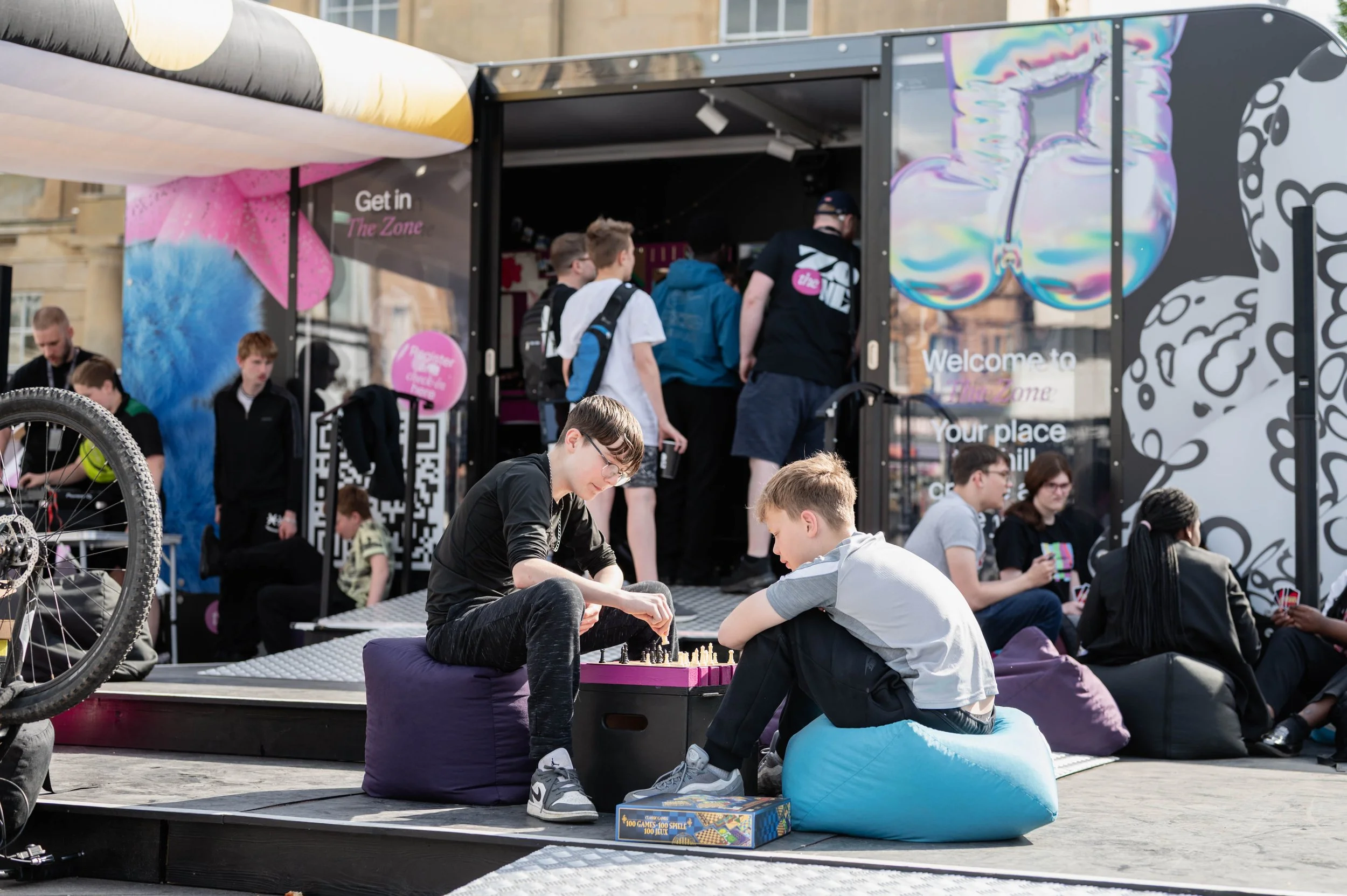
The Zone full of young people - talking, playing games, And Djing
We shouldn’t demonise phones or shame young people for being online. Their phones are part of how they communicate with friends, stay safe, access information and find out what is happening around them. More often than not, they are also how young people discover opportunities like ours in the first place.
The challenge isn’t to drag young people away from their phones or simply ban social media. It’s on us - as adults, organisations, communities and keepers of the systems - to create more spaces for young people.
At The Zone, we see this all the time. Young people arrive with their phones in hand, because, of course, they do. But when there are people to meet, games to play, music to make, ideas to explore and opportunities to get involved, phones often stop being the centre of attention. Not because anyone has told young people they cannot use them. Because something else is available to them.
That is the crux of it. If we want young people to spend less time online, we need to build more spaces, experiences and communities that are worth being offline for.
Although The Zone, Zone Go and Sound Board all look very different, they are all trying to answer the same question: how do we create more opportunities for young people to connect, create, contribute and belong? This summer is the first chapter of Zest’s new 2026–2030 strategy. It won’t answer that question on its own, but it marks the beginning of the next stage of our work. Over the coming years, we’ll keep listening, learning and building alongside young people.
Taking creativity into communities
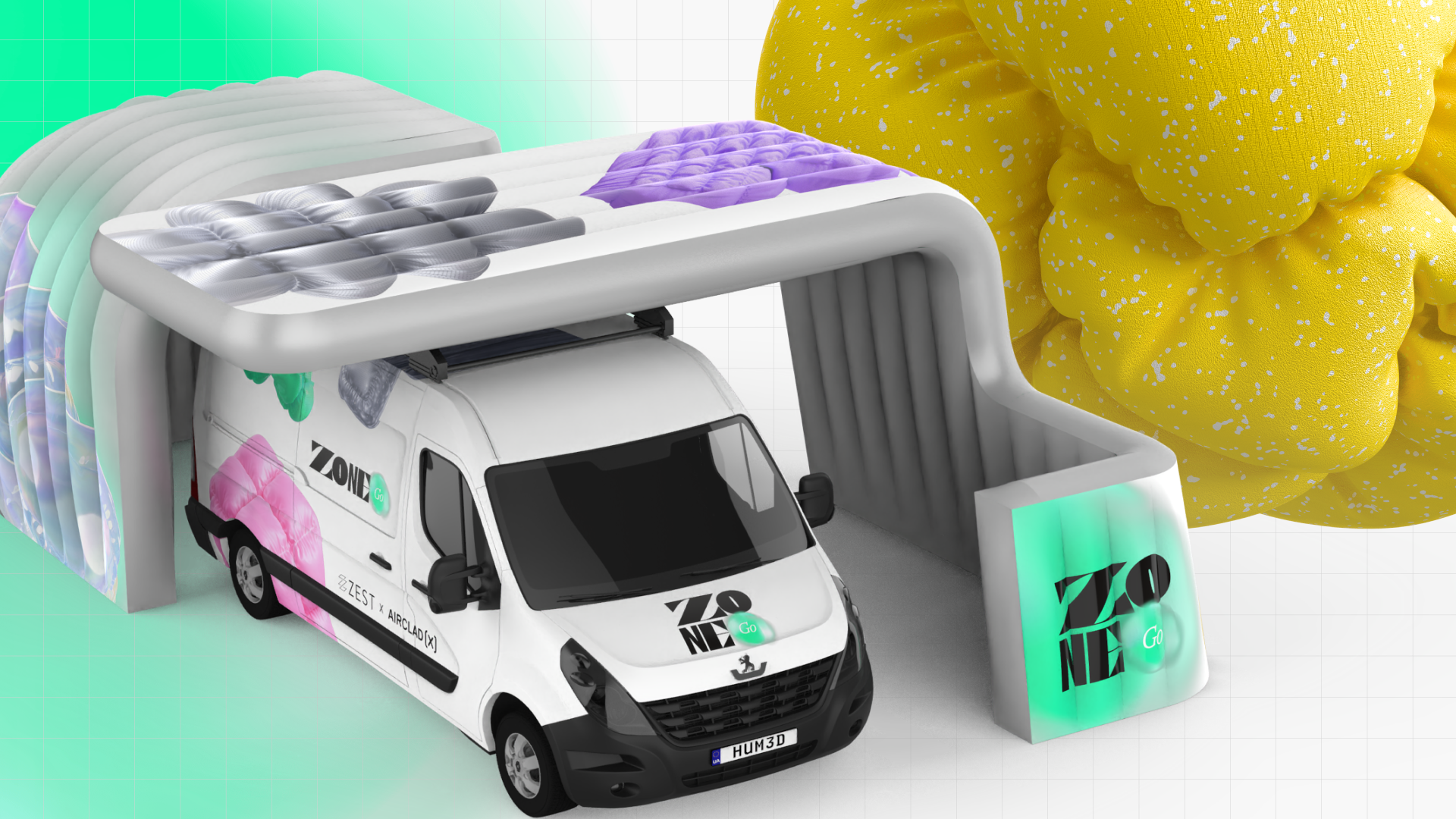
An Artist’s impression of Zone Go from above
The launch of Zone Go is probably the clearest example of this. For the last two years, we have seen the impact The Zone can have when it arrives somewhere. We have watched young people transform public space simply by being given permission to use it differently. We have seen friendships form, confidence grow and communities gather around something positive.
But not every young person can get to their town centre, and not every community has the infrastructure, budget or physical space to host a full-scale The Zone. So this summer, we are trying something new.
Developed in partnership with AirClad and funded by BNA, Zone Go brings the spirit of The Zone directly to neighbourhoods. Following its first appearance at Bradford Festival, it will tour four communities across Mansfield before returning to Lincoln to visit five neighbourhoods across our home city.
Rather than asking young people to travel to us, we are taking the work to them. Because where a young person lives should not determine whether they have access to creativity, connection and opportunity.
Holding space in public
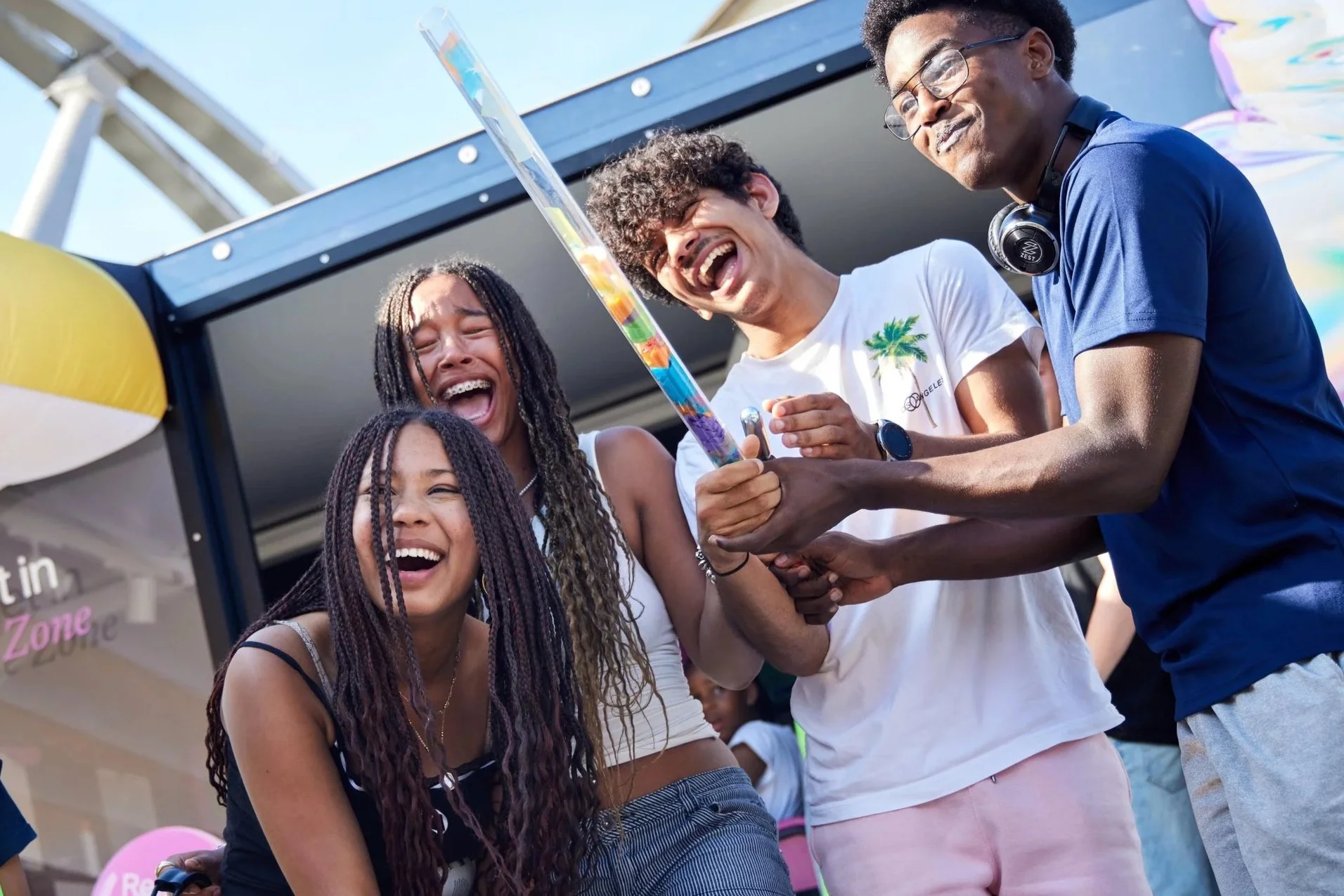
Party night at The Zone
Alongside Zone Go, The Zone returns to Lincoln for four weeks before touring to Spalding and Gainsborough.
What continues to excite us about The Zone is its visibility. In a world where so much youth provision has disappeared behind closed doors or vanished altogether, The Zone makes a very simple statement: young people belong in public space.
They deserve places designed with them in mind, and opportunities to gather without being viewed as a problem to be managed. They deserve moments of joy, creativity and connection that do not depend on whether they can afford a ticket.
Some young people come to make art. Some come to play games. Some come for a workshop. Some stay all day. Others pop in for 20 minutes while passing through town. All of those experiences matter.
Creating space for conversation

Sound Board in action
At the same time, Sound Board will continue touring the country, visiting Ripon Theatre Festival, Centre Stage Festival in Richmond, Refract Festival in Sale and Beyond the Tides Festival in Redcar.
The show was created around a simple belief: people have more to say than they’re often given the chance to share, and when communities come together face to face, they often discover they have more in common than they realise. Because conversations bring people together in ways algorithms never can.
Part chat show, part game show and part performance, Sound Board creates opportunities for audiences to shape what happens next. Every performance is different because every audience is different.
What has fascinated us throughout its development is how quickly people engage when they are genuinely invited into the conversation. Young people are often described as disengaged or apathetic. Yet time and again, we meet young people who are thoughtful, passionate, funny, frustrated, hopeful and deeply invested in the future of their communities.
Most are not waiting to be spoken to. They are waiting to be listened to.
The Next Chapter
None of this is a complete answer to the challenges young people are facing. No single project could be. But we do believe it is part of the answer.
Every youth space we create, every conversation we facilitate, and every opportunity we build sends the same message: young people belong here. That’s what our team, artists, youth workers, partners and young people themselves will be building this summer. More importantly, it’s what we’ll keep building long after this summer is over.
Because every young person deserves places where they can belong, create, contribute and connect with others. This summer is just the first step. Young people have been telling us what they need for years. Our job is to keep building it with them.

